With the UK’s Net Zero deadline of 2050 fast approaching, reducing carbon emissions is a constant topic of discussion in the media. But what does reaching net zero actually involve? How will it impact us and our households, and what kind of infrastructure changes are needed to get there?
Decarbonisation affects three major services we all need to access: electricity, transport and heating. Let’s take a view of the overall picture…
Decarbonising the system
As consumers, we’re often told that the decisions we make are crucial in helping to save the planet. Buying an electric car, for instance. Choosing local produce over imported fruit and vegetables. Installing heat pumps and only heating our homes to a ‘comfortable’ temperature.
These choices add up, but they don’t happen in a vacuum. Aiming for net zero means addressing the causes of climate change, and that means taking decisions at a systemic level.
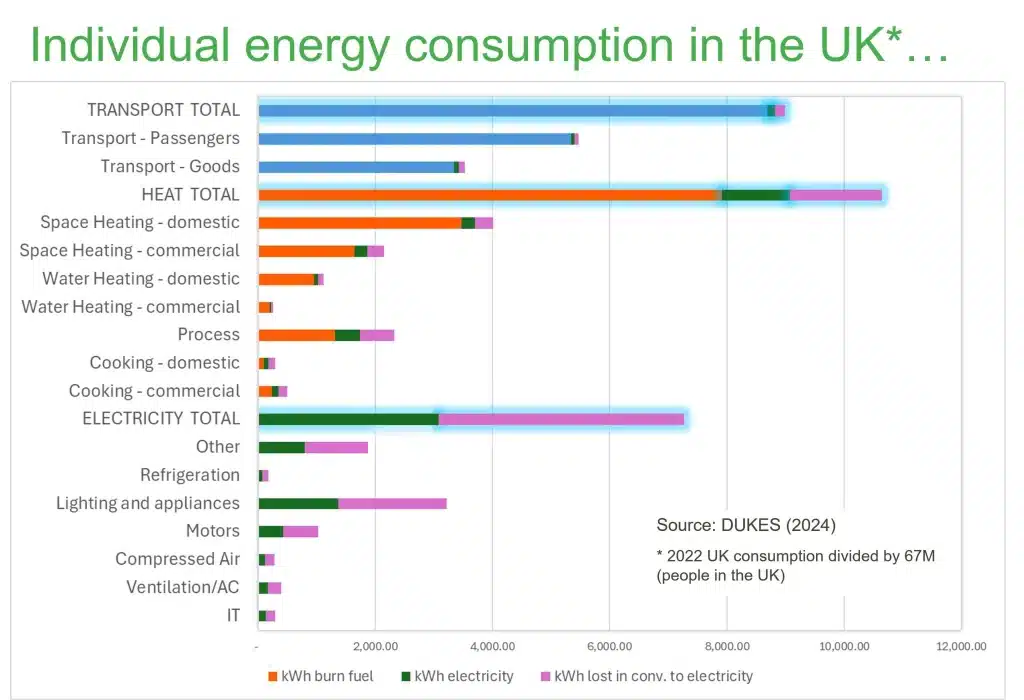
It’s useful to think about where those carbon emissions come from, using the categories already mentioned:
- transport
- electricity production and usage
- using energy for heat
These categories relate to us as individuals, but they also incorporate a lot of industrial production. That’s one way in which reaching net zero is a societal undertaking, not just an individual one.
What needs to change?
Historically, electricity, transport and heat have been supplied by three different systems: electricity from the grid, traditionally supplied by fossil fuel combustion and nuclear fission; transport has generally depended on diesel and petrol; and for many people, heating has come from natural gas. There was some overlap between the three systems, but on the whole they functioned independently.
Of course, some changes are already underway, and these are well publicised. Electricity production is moving towards significant levels of renewable generation. Electric vehicles are increasingly common for transport. Our homes are also being made more sustainable with improved insulation, and where heating is still required, we are starting to replace gas with heat pumps and other low emission systems.
Rethinking the way forward
But all this doesn’t add up to a carbon emissions revolution. At the moment, discussion around net zero tends to focus on the supply side, and that means it just doesn’t go far enough. For example, replacing your petrol car with an electric one might seem like a green choice, but electric vehicle production creates emissions – like any industrial process. Reducing transport emissions across the board requires us to reduce people’s reliance on their cars. In this context, car-sharing schemes, public transport and pedestrian-friendly urban planning are all powerful measures that create change.
Without this kind of large-scale rethinking, net zero is destined to remain an unattainable goal.
If you want to put yourself in the shoes of the key stakeholders responsible for decarbonising a national-scale economy, sister company Heuristic have just launched their new Decarb-a-nation workshop to explore this.