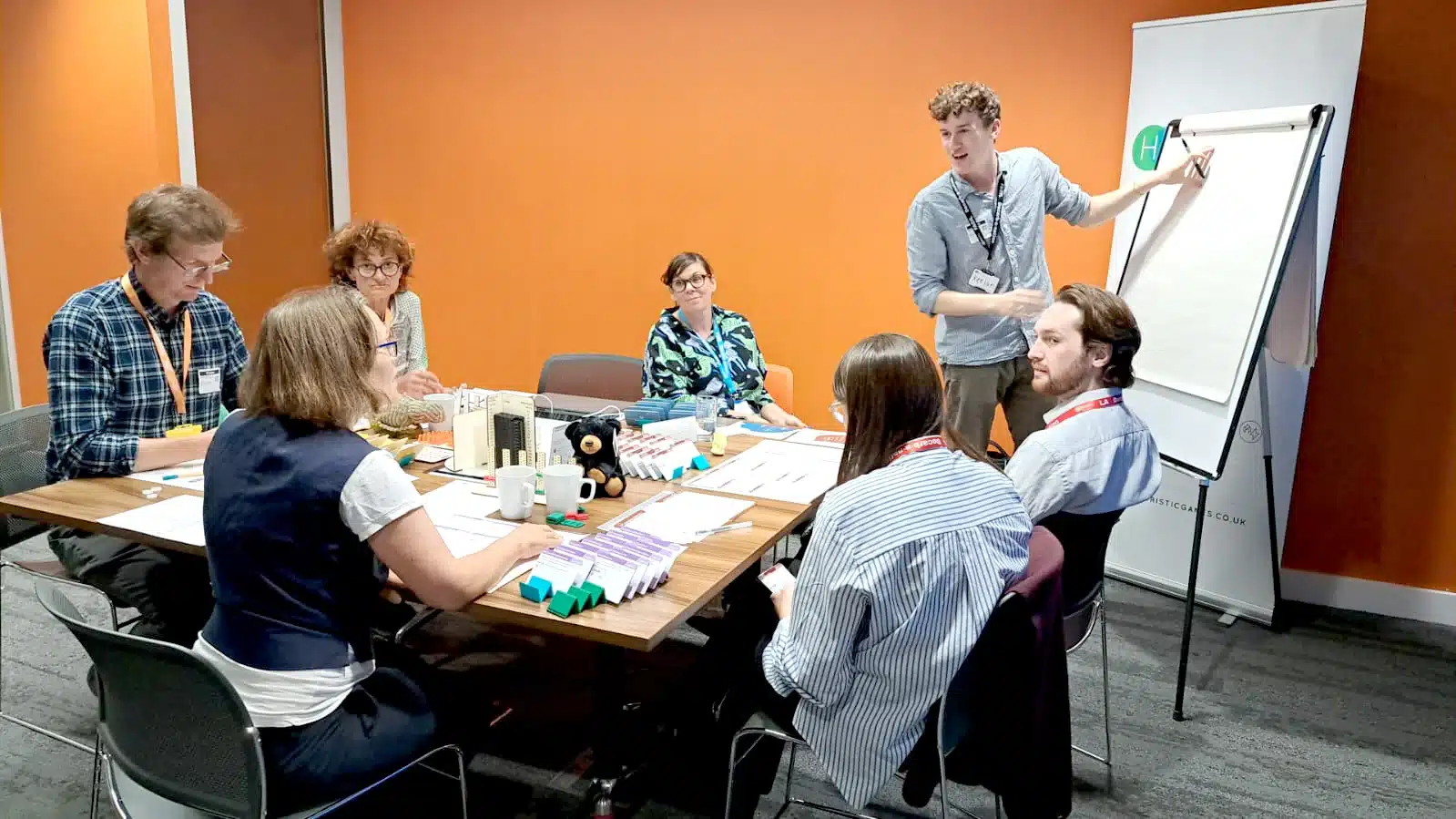
Back in 2022, I was new to the energy industry and just started focussing on the development of a new workshop (Decarb-a-nation), with Cultivate Innovation’s sister company Heuristic. I must admit, other than a fun, team building or educational exercise, I struggled to understand how this would fit in with my broader research aims. I thought I’d write a paragraph or two to explain how this opinion has shifted as my understanding of the sector, and the challenges required to decarbonise, have grown.
Holistic solutions to net zero
For me, being in research, and having spent time seconded to different companies, I’ve had the privilege of witnessing the incredible work going on across the sector. Gradually, this work is becoming more connected, as the energy transition takes shape and approaches are becoming more holistic.
…the conflicting operational realities, shaped by decades of practice, which, even with all the good intent in the world, are incredibly difficult to connect.
Conflicting realities
But, what I’ve found inescapable, are the conflicting operational realities, shaped by decades of practice, which, even with all the good intent in the world, are incredibly difficult to connect. As we try to coordinate net zero, understanding the challenges associated with these realities is essential, but in a fast paced, resource constrained environment, it isn’t easy. This can lead to legitimate organisational concerns being pejoratively labelled as ‘vested interests’.
Of course, in some cases, this is true. But, in my experience, most are real practical concerns that organisations have as they face up to the net zero challenge. Undermining these, risks developing inappropriate solutions to transitional challenges and destabilising the net zero agenda.

Cross-sector engagement and collaboration
The message from this, to me, is how essential it is to understand how different organisations/sectors operate and what specific challenges they face, in order to create an anticipatory whole systems approach to net zero.
This is why I now see the research benefit of the workshop we created. It is precisely this – facilitating cross-sector engagement and collaboration, and helping people understand the transition from the perspective of others – that the workshop is designed to achieve.